Your calorie total cannot tell you how salty dinner was
Calories and sodium answer different questions. Explore the DASH-Sodium evidence and learn to compare foods without guessing from appearance.
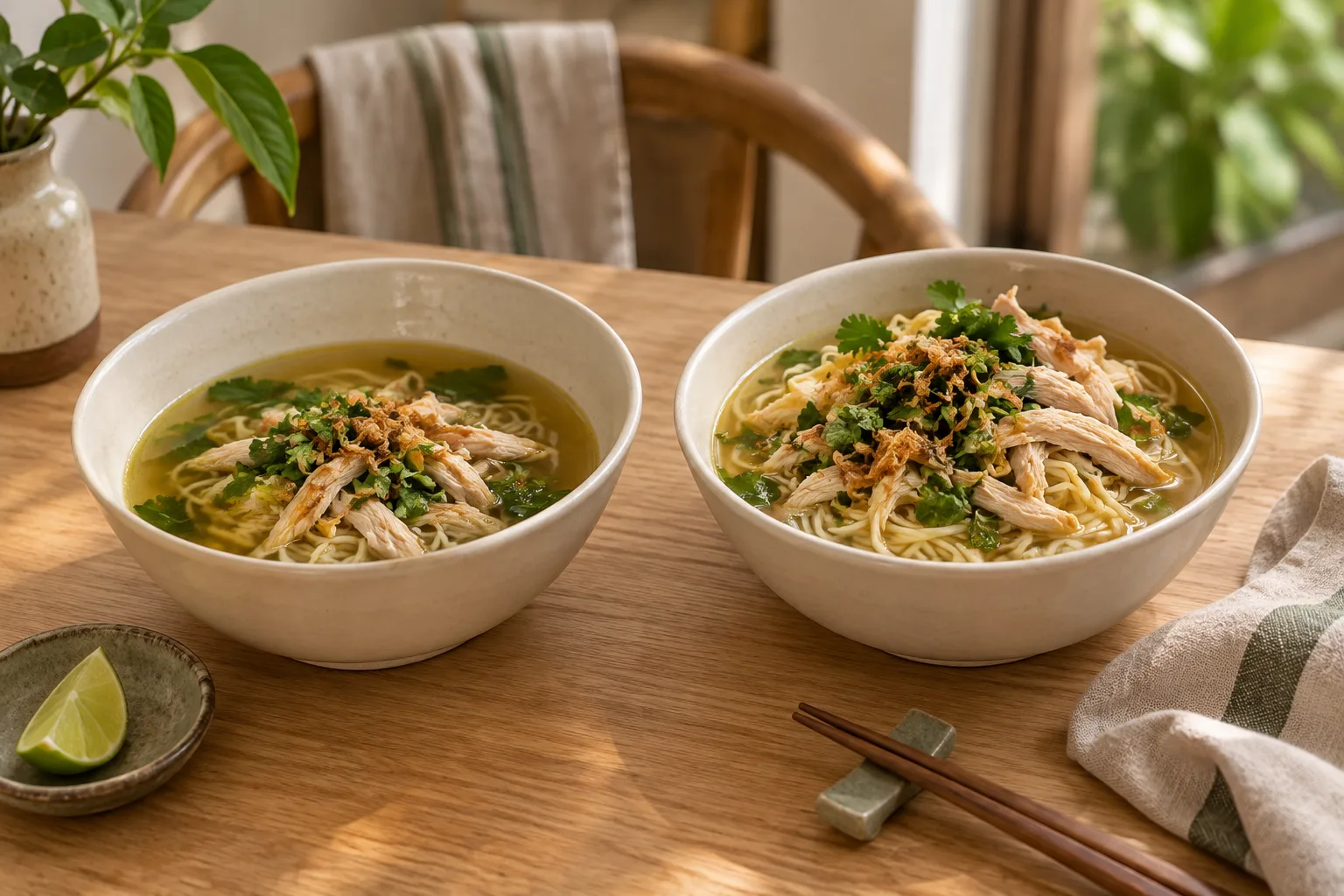
Two bowls of soup arrive at the table. They look similar: vegetables, noodles, broth, a scattering of herbs.
Their calorie estimates might be similar too.
Yet one could contain substantially more sodium, depending on the stock, seasoning, sauces, and quantities used. Those details are difficult to see in a photograph—and a calorie number cannot reveal them.
Calories answer a question about energy. They do not answer every question about a meal.
Why sodium deserves its own attention
The DASH-Sodium trial tested how dietary pattern and sodium intake affected blood pressure.
Researchers assigned 412 participants to either a control eating pattern or the DASH pattern, which emphasised foods including vegetables, fruit, and low-fat dairy. Within each group, participants consumed three sodium levels for 30 days each, in randomized order.
Reducing sodium lowered blood pressure. Combining lower sodium with the DASH pattern produced the largest reductions. This was a controlled feeding study, giving researchers more control over what participants consumed than a survey of remembered meals would allow. Sacks and colleagues, New England Journal of Medicine
The study supports paying attention to sodium and the overall eating pattern. It cannot tell us how much sodium was in tonight’s soup or predict your personal response to changing one ingredient.
Read the amount beside the number
A useful place to start is the label on something you use regularly.
Check whether sodium is listed per serving, per 100 grams, or on another basis. Then consider how much you actually use.
Here is a fictional comparison. Sauce A contains 400 milligrams of sodium per tablespoon. Sauce B contains 250 milligrams. B has less sodium for the same quantity—but two tablespoons of B would supply 500 milligrams.
The label and the portion have to be read together.
Comparing different serving sizes without noticing them can make two products look more different—or more similar—than they really are.
Keep the food familiar
Exploring less salty cooking does not require replacing your usual meals with an unfamiliar menu.
You could begin with one dish you already make. Read the labels on its stock or sauces. Measure what you currently add. Then try adjusting one ingredient and taste the result.
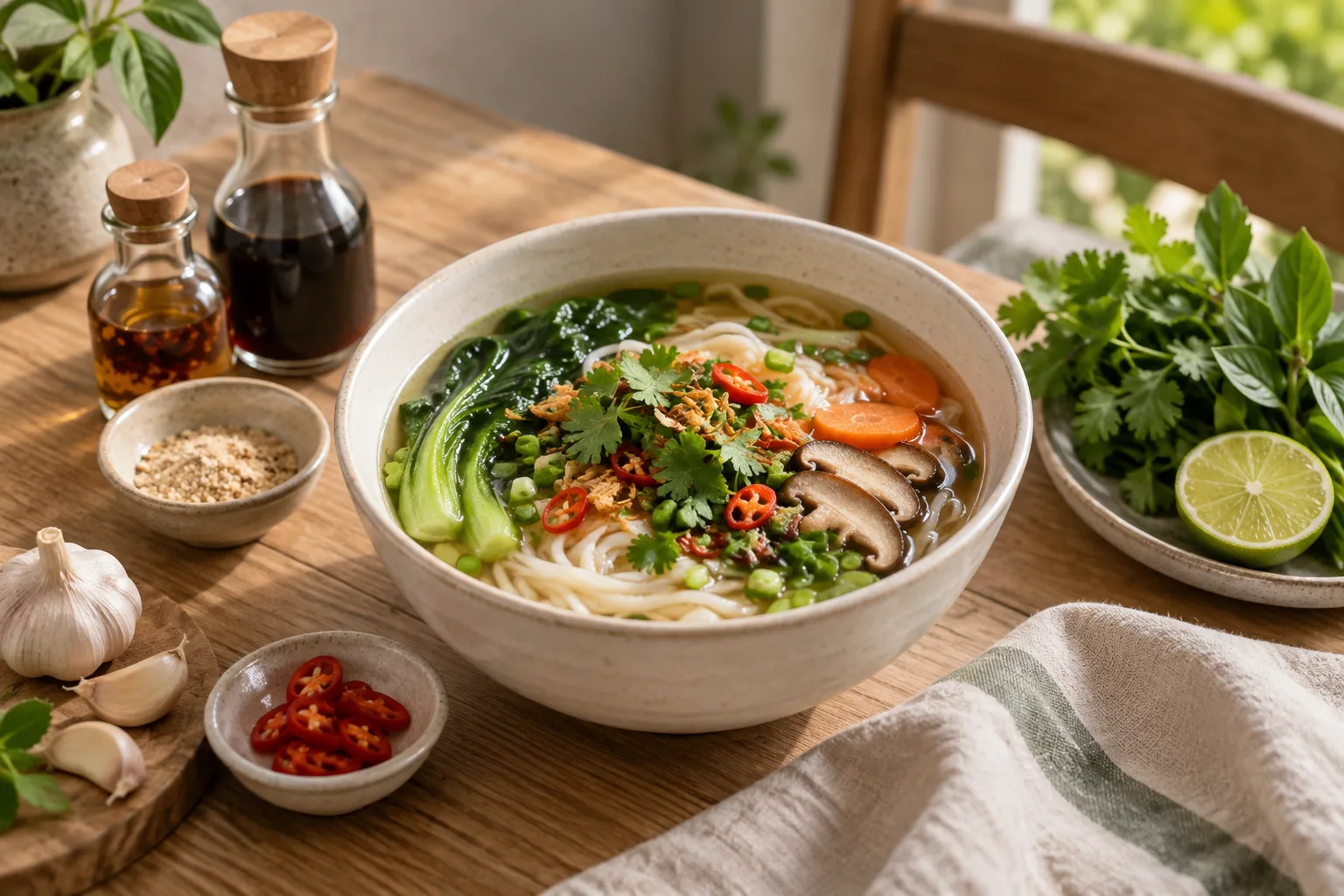
Depending on the dish, lime, herbs, garlic, chilli, or other aromatics may offer ways to change the flavour while you experiment with the seasoning. These are cooking ideas, not a promise about blood pressure.
For more practical suggestions when shopping, preparing food, and eating out, NHLBI provides a guide to reducing salt and sodium. NHLBI: Tips to Reduce Salt and Sodium
Let the record show its limits
With packaged food or a known recipe, you have information to work from. At a restaurant, you may not know the stock concentration, sauce quantities, or recipe.
A food-tracking app cannot recover those details simply by displaying a confident-looking estimate. A calorie-focused chart should not be read as evidence that your meals are low in sodium.
If you follow a prescribed dietary plan, your clinician or dietitian’s guidance takes priority over a generic estimate.
For everyone else, the next useful step can be modest: choose the sauce or seasoning you reach for most often, turn the package over, and read the sodium amount alongside its serving size.
You may learn something about your usual dinner that its calorie total never told you.
This article is general health information, not medical advice. Senumi does not diagnose, treat, cure or prevent any condition. Talk to a qualified healthcare professional about your own situation.