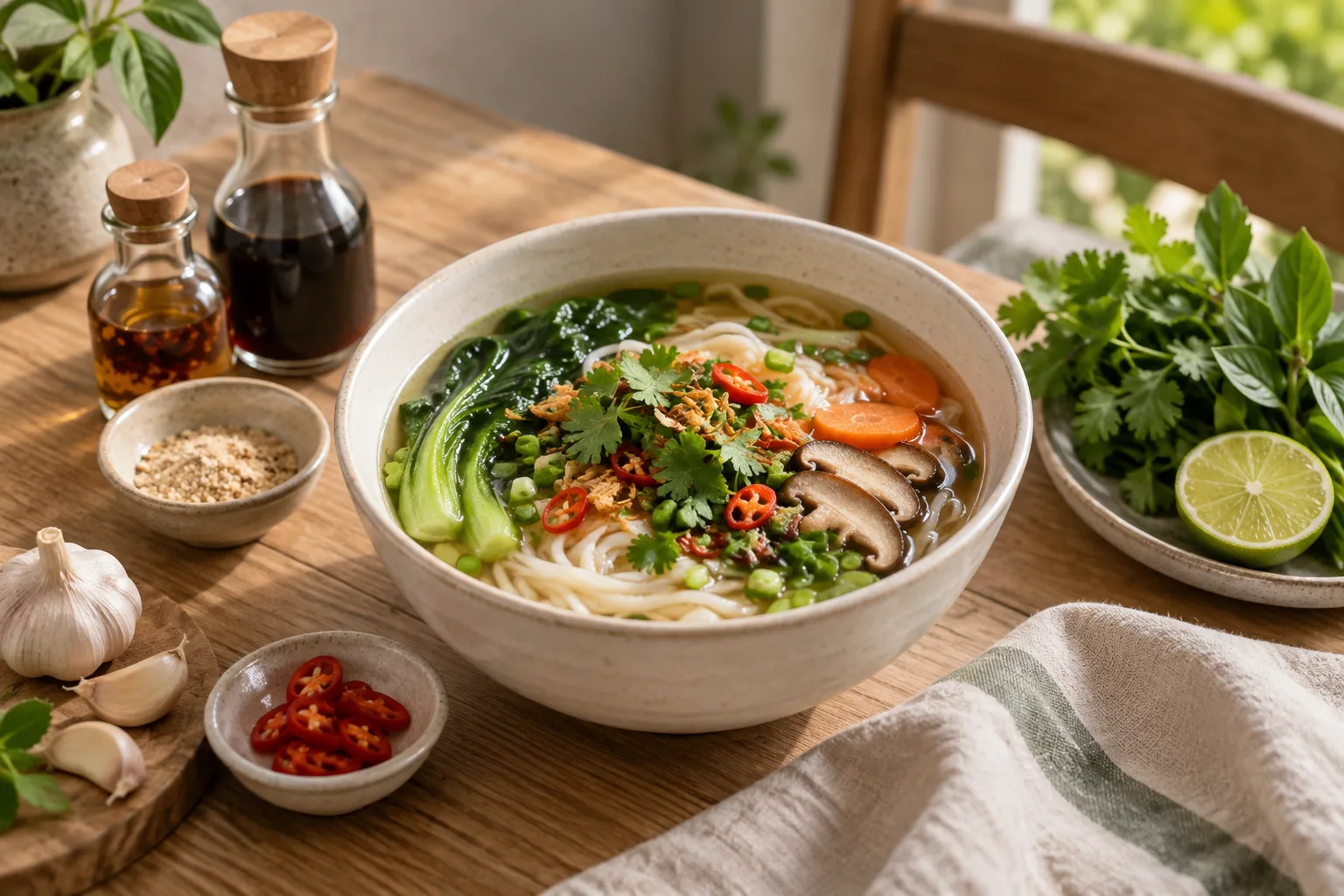
The bowl is the same. The meal isn’t.
Familiar portions can hide different amounts of food. Learn how to make your meal estimates more useful without chasing false precision.
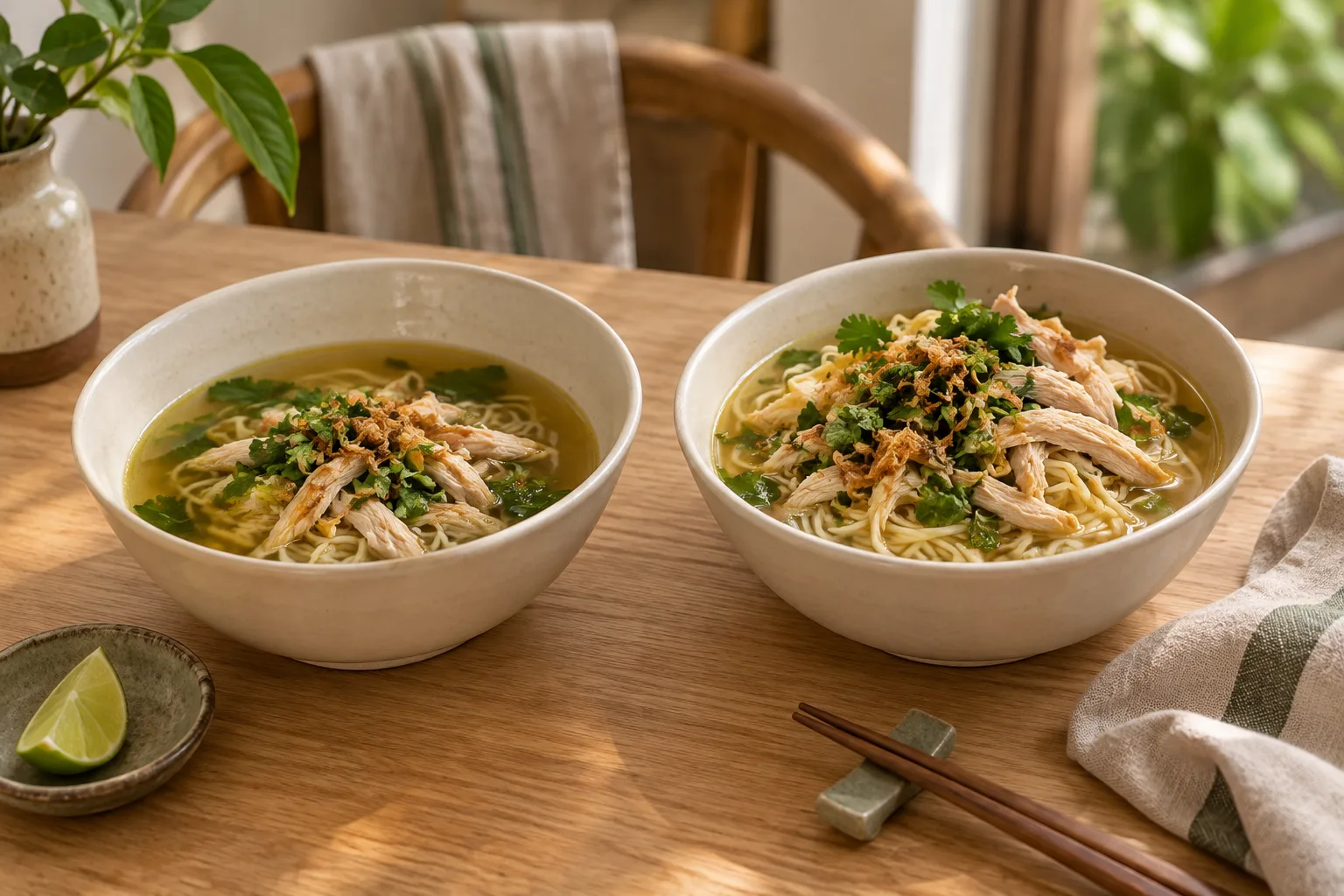
Your favourite noodle shop does not measure lunch with a laboratory scale.
Some days, the noodles sit higher in the bowl. Some days, there is more chicken, a thicker spoonful of sauce, or an extra topping. You order the same dish, pay the same price, and enter the same thing in your food diary: one bowl.
But “one bowl” is a description of lunch, not a precise measurement.
That distinction is easy to overlook when an app presents a neat calorie number. The number looks settled. The meal rarely is.
What does “one serving” actually mean?
A portion is the amount you eat. A serving is a reference quantity, such as the amount used on a nutrition label. Your portion might contain half a serving, one serving, or several. The serving size on a label is not a personal recommendation for how much you should eat. NIDDK: Food Portions
Consider a fictional packet of crackers: 120 calories per 30 grams. Eat 45 grams and the calculation becomes 180 calories. Nothing about the crackers changed; the amount did.
A home-cooked or restaurant meal is less straightforward. “One plate” could mean a shallow layer of rice or a generous mound. A bowl of soup could be mostly broth or packed with noodles. Knowing the name of the dish answers only part of the question.
Correct what you know
You do not need to identify every ingredient before making a food entry more useful.
Suppose an estimate describes five satay skewers, but you ate three. That is a clear difference you can correct. If it assumes you finished the rice and you left half, adjust the rice. If the drink is missing, add it separately.
These are ordinary observations. They do not require you to become an expert in nutrition.
For a mixed meal, start with what you can remember confidently: the main components, roughly how much you ate, and anything left behind. Then check whether the entry describes that meal.
The goal is not to make the number look precise. It is to make the description better match what happened.
Familiar measurements still have limits
Bowls, slices, spoonfuls, and handfuls are useful because they are how people talk about food. They also vary.
Your breakfast bowl may be twice the size of someone else’s. A heaped spoonful is different from a level one. Changing “one bowl” to “half a bowl” can improve an entry, but it does not establish the bowl’s weight or reveal how much oil went into the recipe.
If you already know a food’s weight, that gives you a firmer starting point. If you do not, a reasonable estimate is still an estimate—and it is fine to acknowledge that.
This is especially important with photo-based food tracking. Reviewing the suggested food and amount is part of using the estimate well. A camera cannot tell whether the sauce stayed on the plate or whether you went back for seconds.
Next time you log a familiar meal, pause at the portion before accepting the number. Does it describe what you actually ate?
That small question is often more useful than searching for a more impressive-looking calorie figure.
This article is general health information, not medical advice. Senumi does not diagnose, treat, cure or prevent any condition. Talk to a qualified healthcare professional about your own situation.