Eating out is the meal your food diary gets wrong
Restaurant meals are the hardest to log and often larger than they look. What measured studies found, and a simple way to log them anyway.
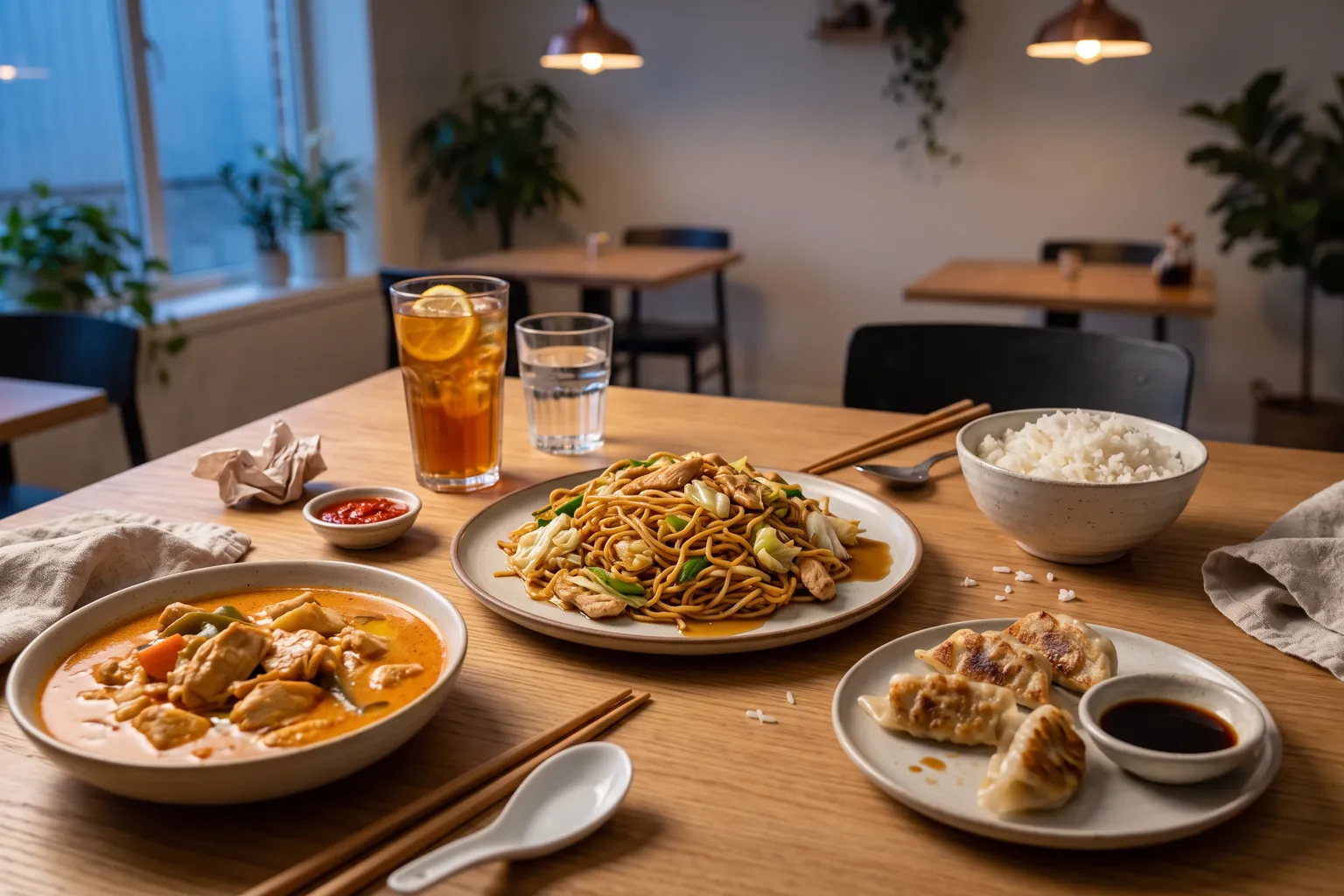
Breakfast at home is easy to log. You know what went into it, and it looks the same most days. Dinner at a restaurant is the opposite: someone else chose the oil, the sauce and the portion, and none of it is written down. It is also the meal people are most likely to guess at, or skip logging altogether.
In short: restaurant meals tend to contain more energy than people think, and the bigger the meal, the bigger the gap. You cannot log one exactly, but a rough entry broken into its parts is far more useful than no entry at all.
What measured studies found
Researchers in the United States have taken restaurant meals to a laboratory and measured their energy directly, by burning samples in a device called a bomb calorimeter. That gives the real figure, not a menu estimate.
- Boston, 2013. Researchers bought 157 meals, the most often ordered dishes from independent and small-chain restaurants, which publish no nutrition information [1]. The average meal contained 1,327 kcal, about two thirds of a typical adult's daily energy requirement. About 1 meal in 13 (7.6%) contained more than a whole day's worth. Where the researchers could compare a dish with the same dish in a national food database, the restaurant version contained 19% more energy on average.
- Three cities, 2016. A larger follow-up sampled the most often ordered meals in San Francisco, Boston and Little Rock between 2011 and 2014 [2]. The average was 1,205 kcal per meal, much the same as comparable meals from large chains. 92% of the meals contained more energy than a typical person needs at a single meal.
What it cannot tell you. These were US restaurants, and portions differ between countries and cuisines. The studies measured what was served, not what people ate: some of those plates will have gone home in a box. They show what a restaurant meal can contain, not what any particular meal contains.
Why the guess comes out low
A separate study asked 1,877 adults at fast-food restaurants in New England in 2010 and 2011 to estimate the calories in the meal they had just bought, then compared each guess with the actual calorie content [3]. The meals averaged 836 kcal. On average, adults guessed 175 kcal too low, about a fifth. The larger the meal, the more they underestimated.
That pattern fits what food diary users say themselves. In a 2015 survey of 141 people who kept or had kept a food diary [4], respondents rated packaged food the easiest thing to log (6.5 on a seven-point scale) and restaurant meals among the hardest (3.6). Their reasons: they did not know the ingredients, the proportions, how the food was cooked, or how big the portion was.
There is also the cost of trying. In a Dutch survey of people who had stopped using a nutrition app, the most common reason was the time it took (14 of 38 people) [5]. Some respondents in the 2015 study said they had started avoiding food that was hard to log [4]. A restaurant meal that takes ten minutes to enter is the meal that gets left out, and a diary with the biggest meals missing can make your week look lighter than it was. Your food diary is a story with missing pages looks at what those gaps do.
A simple way to log a restaurant meal
The aim is not a precise number. It is a record that is roughly right and keeps your week's picture honest.
- Log it at the table, or soon after. A meal logged that evening from memory loses the side dish, the bread and the drink.
- Log the parts, not "dinner". Main, side, sauce, drink. Each part is easier to estimate on its own, and you will see which part carried the most.
- Name what you know the photo cannot show. If it was fried, came in a creamy sauce, or the rice was glossy with oil, say so. Restaurant food is often richer than the same dish at home.
- Log the shared plates. Starters, a few pieces from a friend's dish, the dessert you split. Count your share.
- If you only take a little, log what you ate. The studies measured what was served. If half went home, log the half.
- A rough entry beats a blank one. If you can manage only "noodle soup, large bowl, iced tea", log that. A blank entry looks the same as a meal you never ate.
- Save the meals you order again. A regular order at a regular place only needs estimating once.
How Senumi helps
Senumi is built so that a restaurant meal takes seconds to log, because that is the meal most likely to go missing.
- One photo, every item on the plate. The scan comes back as a list of separate foods, each with its own portion estimate, rather than one vague "dinner".
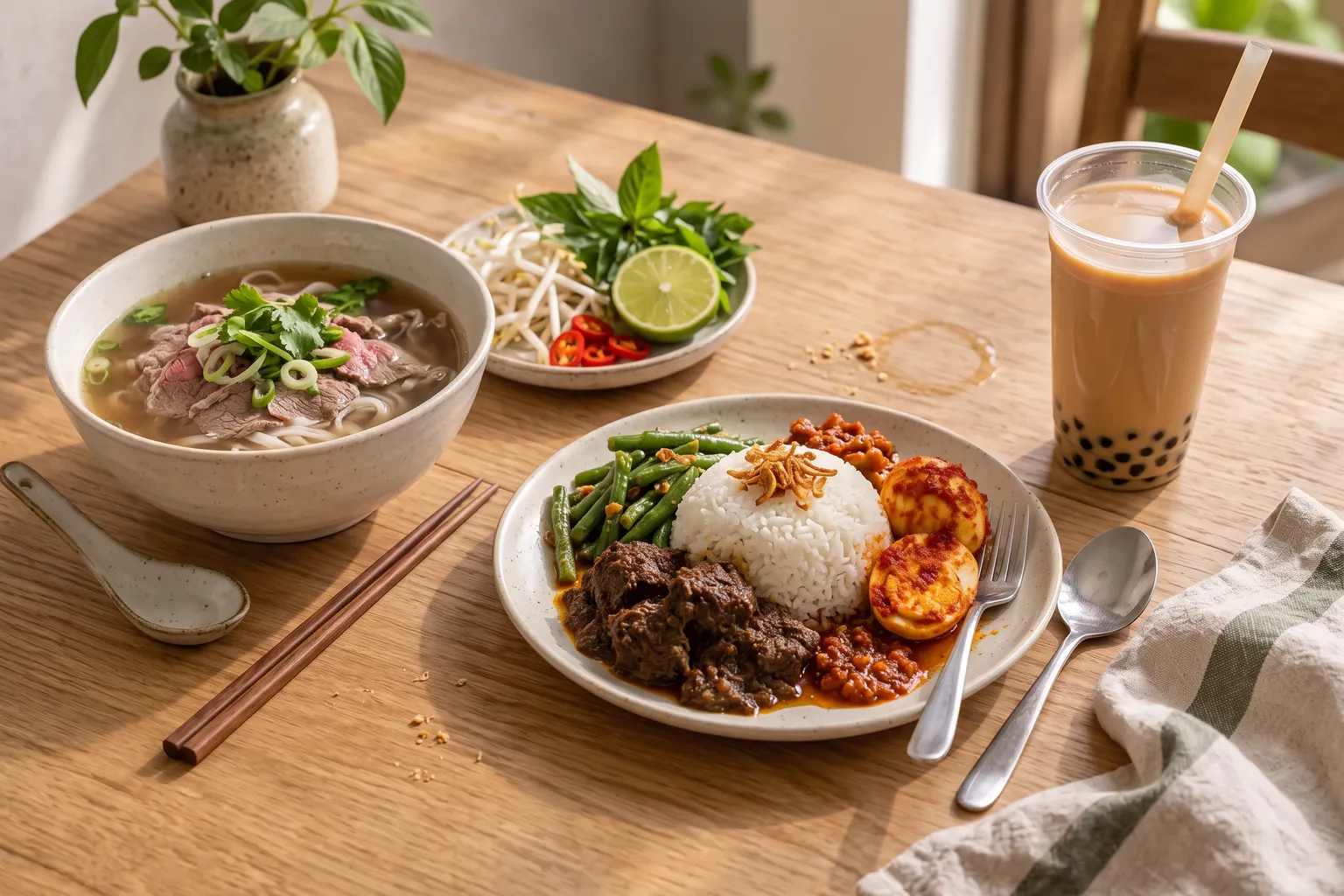
- Say it in a sentence when a photo won't work. Dim restaurant light, a shared table, a meal you forgot to photograph: type "beef noodle soup, a few dumplings and a sweet iced tea" and get an itemised estimate back.
- Check it before it counts. Remove what you did not eat, change a portion, add the sauce. Nothing enters your history until you confirm.
- Saved meals. Save a meal you have reviewed, and log the same order next time without estimating it again.
- Estimates are labelled as estimates. Senumi cannot see the oil in a sauce any better than you can. It will not pretend a photo is a kitchen scale.
Food and portion figures from any app, Senumi included, are estimates. Never use them for allergy decisions or medication dosing, insulin included. If you need precise numbers for a health reason, ask your doctor or a dietitian.
Sources
- Urban LE, Lichtenstein AH, Gary CE, et al. The energy content of restaurant foods without stated calorie information. JAMA Intern Med. 2013;173(14):1292-9.
- Urban LE, Weber JL, Heyman MB, et al. Energy contents of frequently ordered restaurant meals and comparison with human energy requirements and U.S. Department of Agriculture database information: a multisite randomized study. J Acad Nutr Diet. 2016;116(4):590-8.
- Block JP, Condon SK, Kleinman K, et al. Consumers' estimation of calorie content at fast food restaurants: cross sectional observational study. BMJ. 2013;346:f2907.
- Cordeiro F, Epstein DA, Thomaz E, et al. Barriers and negative nudges: exploring challenges in food journaling. Proc SIGCHI Conf Hum Factor Comput Syst. 2015:1159–1162.
- van der Haar S, Raaijmakers I, Verain MCD, Meijboom S. Incorporating consumers' needs in nutrition apps to promote and maintain use: mixed methods study. JMIR Mhealth Uhealth. 2023;11:e39515.
This article is general health information, not medical advice. Senumi does not diagnose, treat, cure or prevent any condition. Talk to a qualified healthcare professional about your own situation.