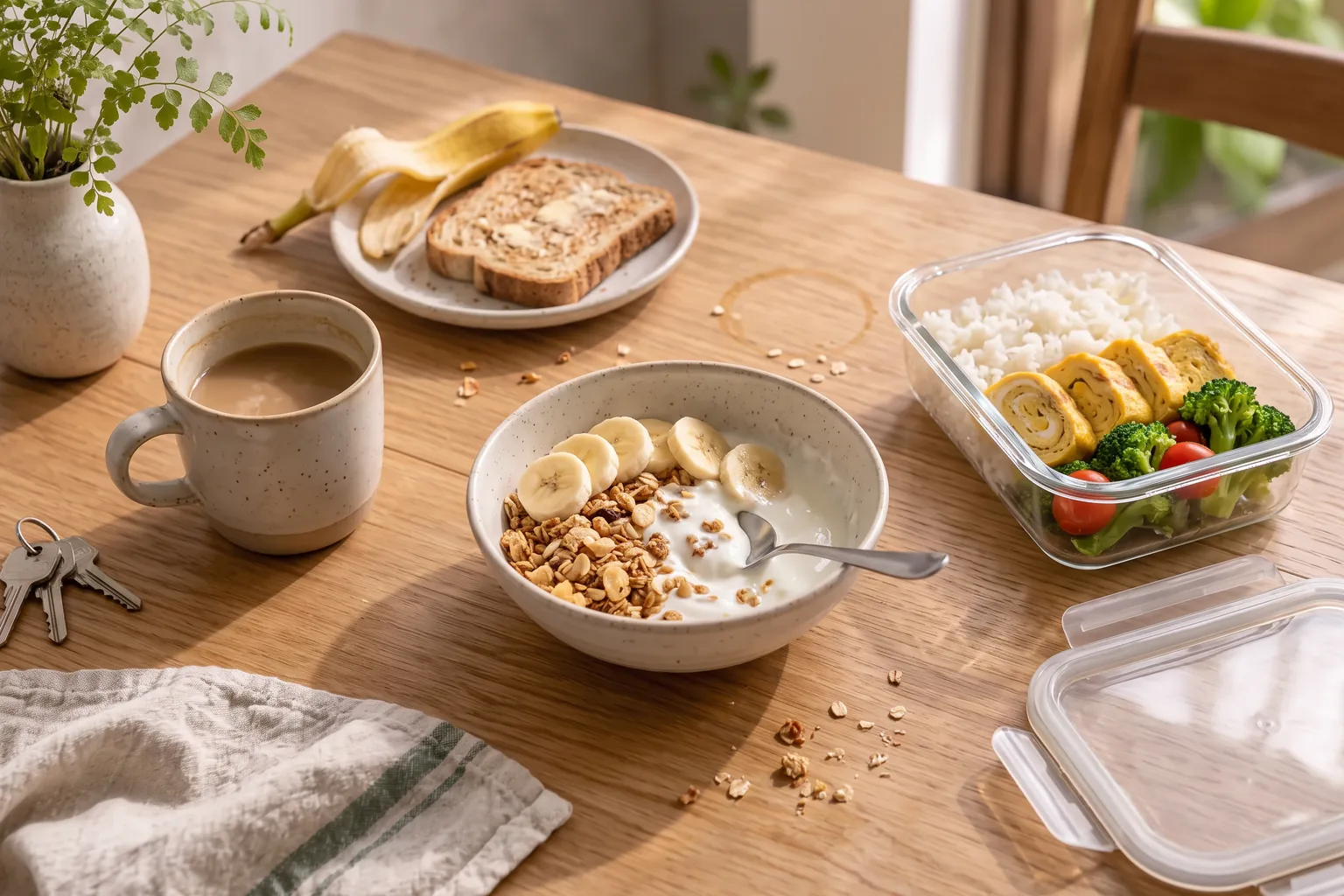
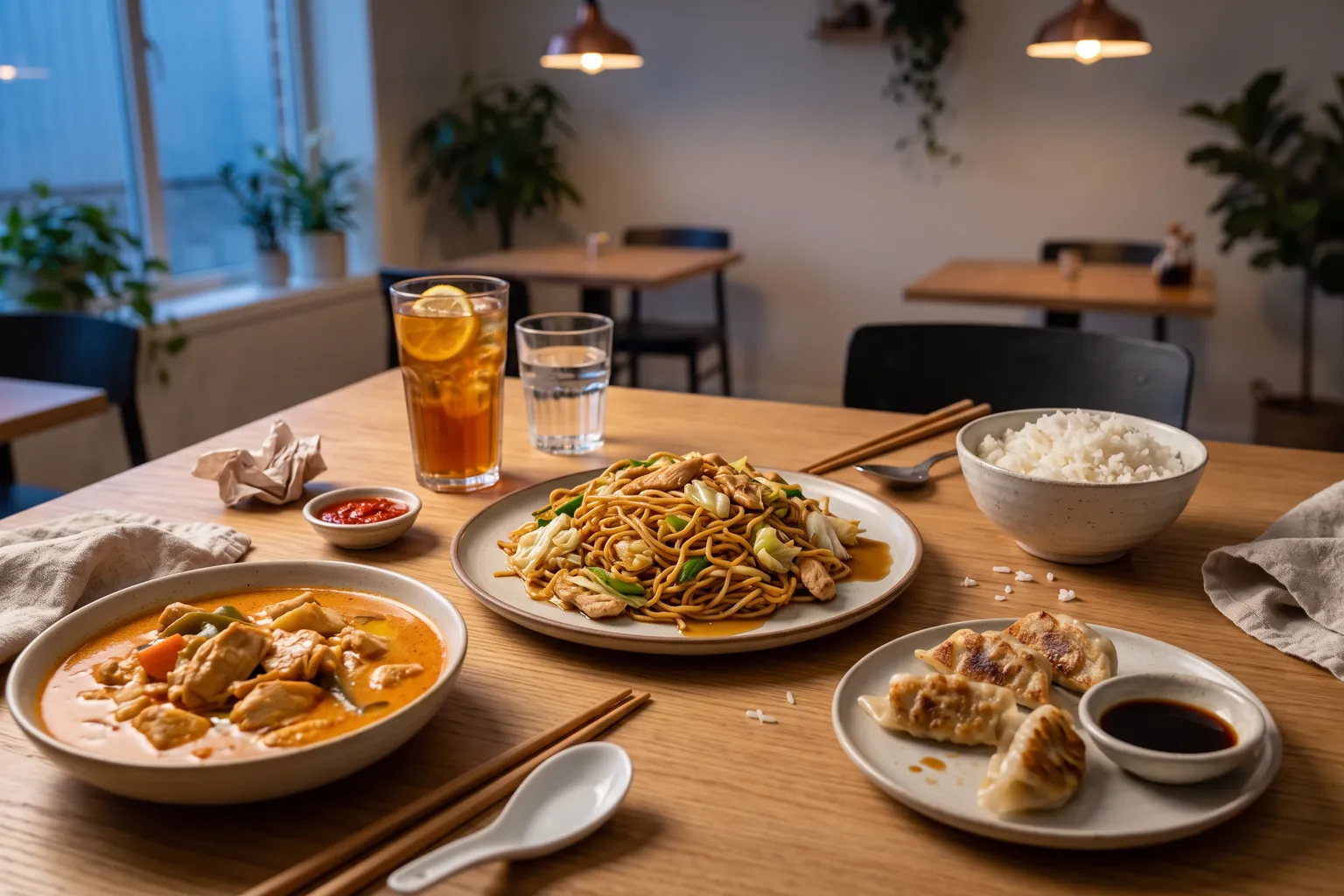
The calories you drink are the ones you forget
Milk tea, juice, sweet coffee and soft drinks are easy to leave out of a food log. What studies found about drinks, and how to log them.
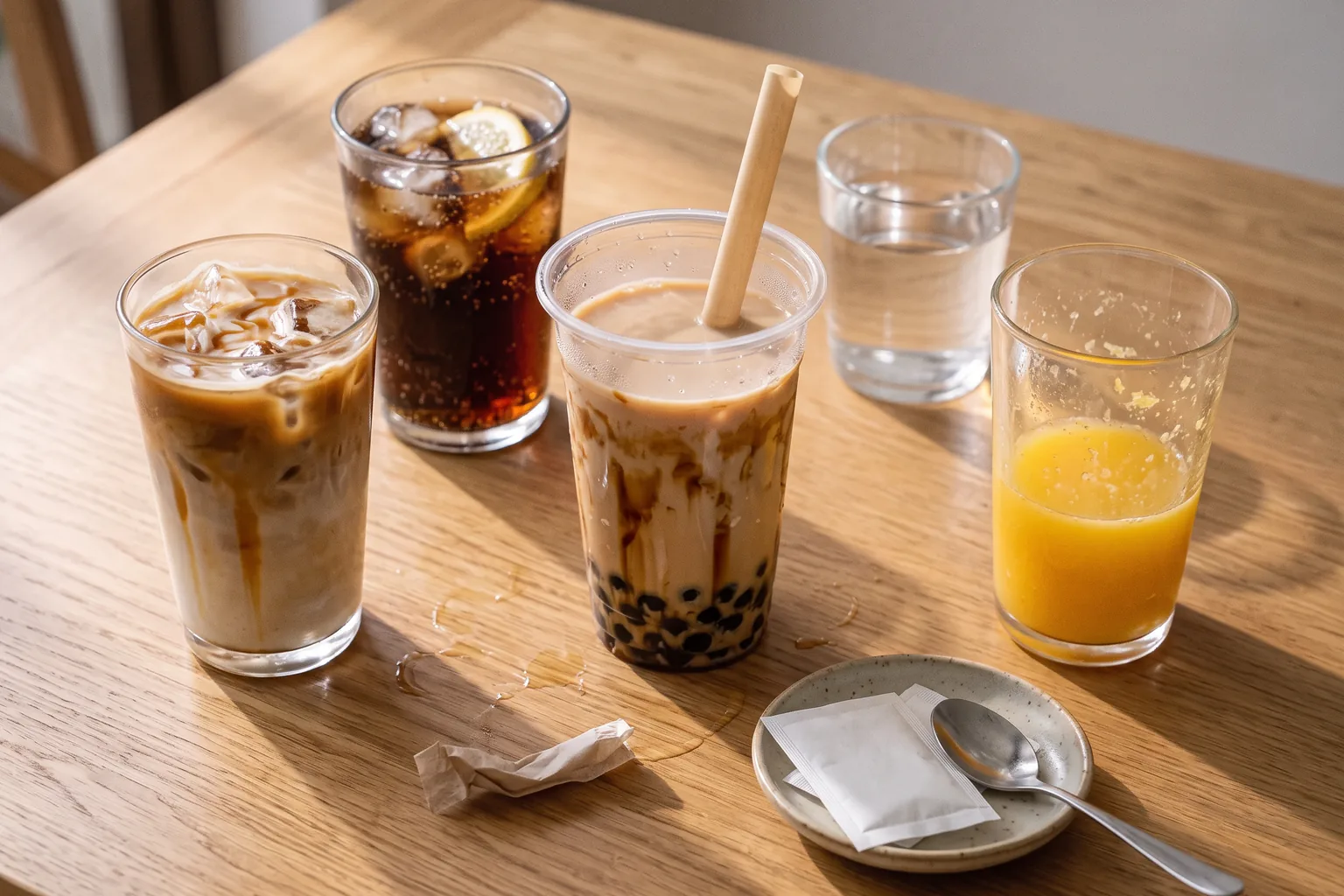
Ask someone what they ate yesterday and they will list their meals. The iced coffee on the way to work, the juice at lunch and the milk tea in the afternoon usually do not come up. Drinks do not feel like food, so they rarely make it into a food diary.
In short: drinks carry energy and sugar like food does, but people underestimate them more and log them less. You do not have to give them up to keep track of them. You only have to count them.
What studies found
- People guess lower when the drink is big. In 2010 and 2011, researchers asked 1,877 adults at fast-food restaurants in New England to estimate the calories in what they had just bought [1]. Adults who bought a high-calorie drink (140 kcal or more) underestimated their whole purchase by an average of 324 kcal. Those who did not buy one underestimated by 102 kcal. After adjusting for the size of the meal, the drink still added to the gap. The authors concluded that buying a high-calorie drink "may uniquely contribute" to underestimating a meal.
- Apps struggle with drinks too. A University of Sydney study tested 18 food-logging apps on Western and Asian meals [2]. For beef pho and pearl milk tea, the apps did not identify the separate components, and energy was underestimated by up to 76%. A drink logged as "tea" can hide the milk, the sugar syrup and the tapioca pearls.
What it cannot tell you. The fast-food study was in one region of the United States and measured what people bought, not what they drank. The Sydney study tested specific apps on specific photos in 2024; apps change. Neither tells you how much is in your own cup.
Where the sugar is
The World Health Organization recommends that adults and children keep free sugars below 10% of their daily energy, and suggests that below 5%, roughly 25 g or 6 teaspoons a day, would bring further benefit [3]. Free sugars include sugar added to food and drinks by a manufacturer, a café or you, plus the sugars in honey, syrups and fruit juice. They do not include the sugars in whole fruit or plain milk.
The WHO gives one comparison: a single can of sugar-sweetened soft drink can contain up to 40 g of free sugars, about 10 teaspoons [3]. That is more than the 25 g figure in one drink. Fruit juice counts as free sugar under the WHO definition even when nothing was added to it, which surprises many people. Sweetened milk drinks, café syrups and bottled teas are less obvious still, because they do not taste as sweet as they are.
None of this means a drink is "bad". It means a day's sugar is easy to misjudge if the drinks are missing from the record.
How to log drinks so they count
- Log every drink that is not water, plain tea or black coffee. Those three are close to zero. Almost everything else has some energy.
- Log the size. Small, regular and large can differ by a factor of two. A café's "large" may be larger than you think.
- Log what went into it. Milk, sugar level, syrup, cream, pearls, jelly. "Brown sugar milk tea, large, 50% sugar, with pearls" is a much better entry than "tea".
- Log drinks as their own item. A drink folded into "lunch" disappears. As a separate entry, you can see how much of the day it was.
- Count the refills and the second round. At a party or a meal out, the second glass is the one that gets forgotten.
- Save your usual order. If you buy the same drink most days, save it once and log it in a tap.
How Senumi helps
- Photograph the cup, or type it. Senumi analyses drinks like any other food. When a photo cannot show what is inside, type "large iced latte with caramel syrup" and get an estimate back.
- Sugar on every scan. Each scan shows sugar alongside calories, protein, carbs, fat and saturated fat, so a drink's sugar is visible on its own.
- Check before it counts. If the estimate missed the pearls or the syrup, add them. Nothing enters your history until you confirm.
- Saved meals. Save the drink you order every day and log it again without estimating it each time.
- Estimates are labelled as estimates. A camera cannot see sugar dissolved in a drink. Senumi says when a figure is a guess, and you can correct it.
Food and portion figures from any app, Senumi included, are estimates. Never use them for allergy decisions or medication dosing, insulin included. If you need precise numbers for a health reason, ask your doctor or a dietitian.
Sources
- Franckle RL, Block JP, Roberto CA. Calorie underestimation when buying high-calorie beverages in fast-food contexts. Am J Public Health. 2016;106(7):1254-5.
- Li X, Yin A, Choi HY, Chan V, Allman-Farinelli M, Chen J. Evaluating the quality and comparative validity of manual food logging and artificial intelligence-enabled food image recognition in apps for nutrition care. Nutrients. 2024;16(15):2573.
- World Health Organization. WHO calls on countries to reduce sugars intake among adults and children. 4 March 2015.
This article is general health information, not medical advice. Senumi does not diagnose, treat, cure or prevent any condition. Talk to a qualified healthcare professional about your own situation.