How long does food logging take once it's a habit?
Logging food feels slow at first. What studies found about the time it takes, how it changes over the months, and what keeps the habit going.
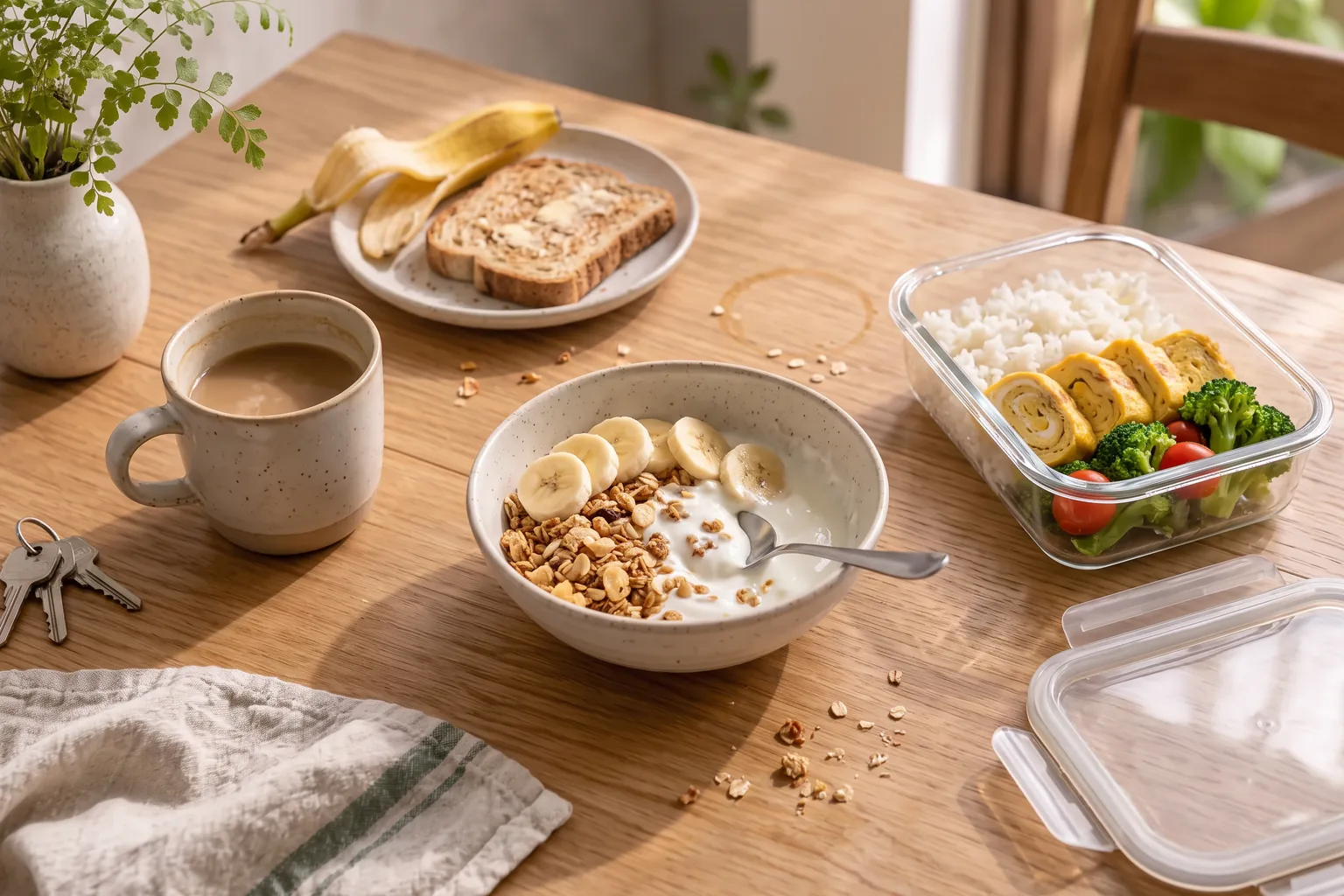
The first week of logging food is the hardest. Every meal means searching, guessing portions and wondering whether the sauce counts. Many people decide it is not worth the effort and stop. Time is the most common reason people give for quitting a nutrition app.
In short: logging takes less time as it becomes routine, and how often you log matters more than how perfectly you log. Missing a day does not undo a habit. Stopping for good does.
How much time it takes
One of the few studies that measured the minutes directly followed 142 adults in a six-month weight-loss programme in the United States, who logged their food on a website [1]. The website recorded every session.
- In the first month, participants spent an average of 23.2 minutes a day logging, across about 2.5 sessions a day.
- By the sixth month, those still logging spent an average of 14.6 minutes a day.
- Not everyone was still logging. At six months, about two thirds (65.5%) were. About a third had stopped completely.
Among the people who logged, the ones who did it most often, about three times a day, and on the most days of the month, did best in the programme. The authors' summary: the frequency of logging mattered, and the time it took fell as people got used to it.
What it cannot tell you. These were volunteers in a structured programme, mostly women, using a website in which every food was typed in. Photo and text logging in a modern app can be much quicker, but the study did not measure that. And the programme's goal was weight loss, which is not everyone's reason to log.
Why people stop
In a Dutch study of people who had given up on nutrition apps, the most common reason was the time it took: 14 of 38 people [2]. In an earlier study of 141 people who kept or had kept a food diary [3], some said they had started avoiding food that was hard to log, or eating the same thing every day to make logging easier. That is the habit shaping the diet, the wrong way round.
Both point to the same problem. The meals that take longest to log, like mixed dishes and eating out, are the ones that wear people down.
How a habit forms
A study at University College London asked 96 volunteers to pick one new daily behaviour (something to eat, drink or do) and to do it in the same situation every day, for example after breakfast, for 12 weeks [4]. Each day they rated how automatic it felt.
- It varied a lot. The time it took for the behaviour to become as automatic as it was going to get ranged from 18 to 254 days.
- Consistency helped. People who did the behaviour more consistently showed a clearer habit curve.
- A missed day did not matter much. Missing a single opportunity did not materially affect how the habit formed.
So there is no magic number of days. But the pattern is encouraging: a habit grows with repetition in the same situation, and it is more forgiving than it feels.
Ways to make logging quicker
- Tie it to the meal. Log before you start eating, or right after. The same moment every time is what turns it into a habit.
- Use the fastest method for each meal. A photo for a plate, a barcode for a packet, a sentence for something you already ate. Which method fits which meal has more on this.
- Save what you repeat. Most people eat a handful of breakfasts and lunches on rotation. Save them once and log them in a tap.
- Accept a rough entry. "Noodle soup, large bowl" is quicker than weighing every ingredient, and far better than nothing.
- Do not stop over a missed day. Log the next meal. The research suggests a gap does far less damage than giving up.
- Look back once a week. Seeing what the log shows is what makes the time feel worth it. A one-page weekly check-in is one way to do it.
How Senumi helps
Senumi is built to keep logging short, because time is what makes people stop.
- One photo, every item on the plate. The scan returns separate foods with portions, so a full plate is one step.
- Type it in a sentence. "Two eggs, toast and a coffee with milk" gets an itemised estimate back.
- Scan a barcode for anything in a packet.
- Saved meals. Your usual breakfast becomes one tap.
- A streak on your home screen. The Today widget shows your logging streak and today's totals without opening the app.
- Check before it counts. Every estimate can be corrected before it is saved, so a quick entry does not have to be a careless one.
Food and portion figures from any app, Senumi included, are estimates. Never use them for allergy decisions or medication dosing, insulin included. If you need precise numbers for a health reason, ask your doctor or a dietitian.
Sources
- Harvey J, Krukowski R, Priest J, West D. Log often, lose more: electronic dietary self-monitoring for weight loss. Obesity (Silver Spring). 2019;27(3):380-4.
- van der Haar S, Raaijmakers I, Verain MCD, Meijboom S. Incorporating consumers' needs in nutrition apps to promote and maintain use: mixed methods study. JMIR Mhealth Uhealth. 2023;11:e39515.
- Cordeiro F, Epstein DA, Thomaz E, et al. Barriers and negative nudges: exploring challenges in food journaling. Proc SIGCHI Conf Hum Factor Comput Syst. 2015:1159–1162.
- Lally P, van Jaarsveld CHM, Potts HWW, Wardle J. How are habits formed: modelling habit formation in the real world. Eur J Soc Psychol. 2010;40(6):998-1009.
This article is general health information, not medical advice. Senumi does not diagnose, treat, cure or prevent any condition. Talk to a qualified healthcare professional about your own situation.